


Smart City: Building Trust Through Transparency
You have probably experienced reporting a damaged pothole, a broken streetlight, or accumulated garbage in your neighborhood to the municipality, only to hear nothing back for days. This lack of transparency has historically been one of the biggest challenges in urban management. Today, however, with the emergence of integrated and smart city systems, the equation has changed. In this article, we explore how transparency in tracking neighborhood issues increases the speed of municipal response and helps build 100% trust among citizens.
Challenges of Traditional Urban Management Systems
In traditional methods, citizens usually reported problems through phone calls or in-person visits. This process faced several issues:
- Lost Requests: Amidst piles of paperwork or calls, many reports went missing.
- Lack of Tracking: Citizens had no way of knowing the status of their requests.
- Decline in Public Trust: When citizens feel their voices aren’t heard, they lose motivation to participate in civic matters.
Integrated Smart Systems: A Bridge Between Citizens and Municipalities
Smart systems (like iapp) are platforms that allow citizens to report neighborhood issues directly to the central municipal system by uploading photos, exact GPS locations, and descriptions. These systems are available 24 hours a day, seven days a week.
How Technology Accelerates Response Times
The use of integrated systems has revolutionized the speed of contractors and municipal executive teams:
- Accurate & Automated Routing: As soon as an issue is logged, the smart system automatically forwards it to the relevant department (e.g., green spaces, waste management, civil engineering) in that specific district.
- Eliminating Bureaucracy: Time-consuming internal paperwork is removed, and work orders are issued digitally.
- Smart Prioritization: Algorithms can prioritize issues for faster resolution based on the frequency of reports in a specific location or the level of hazard involved.
Transparency: The Golden Key to Earning Citizen Trust
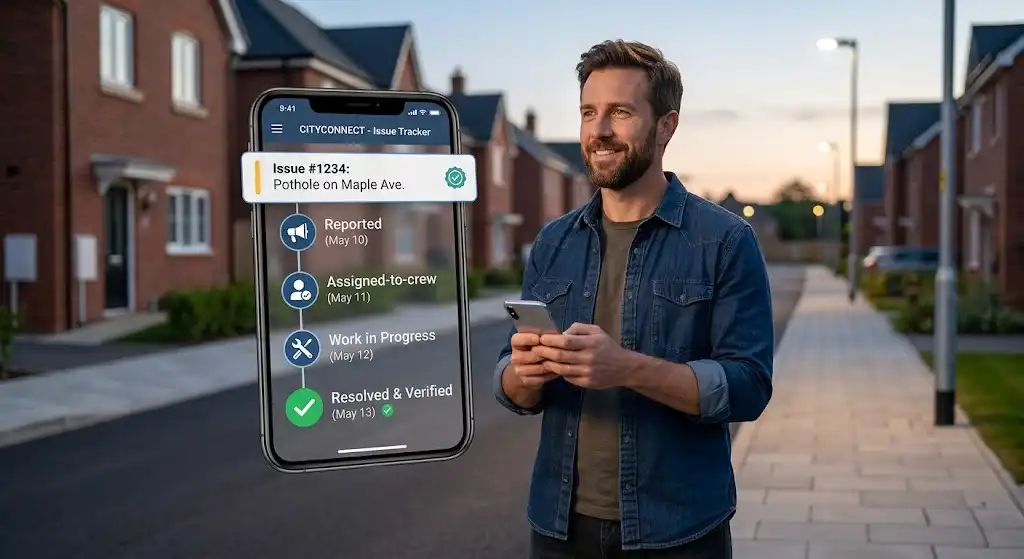
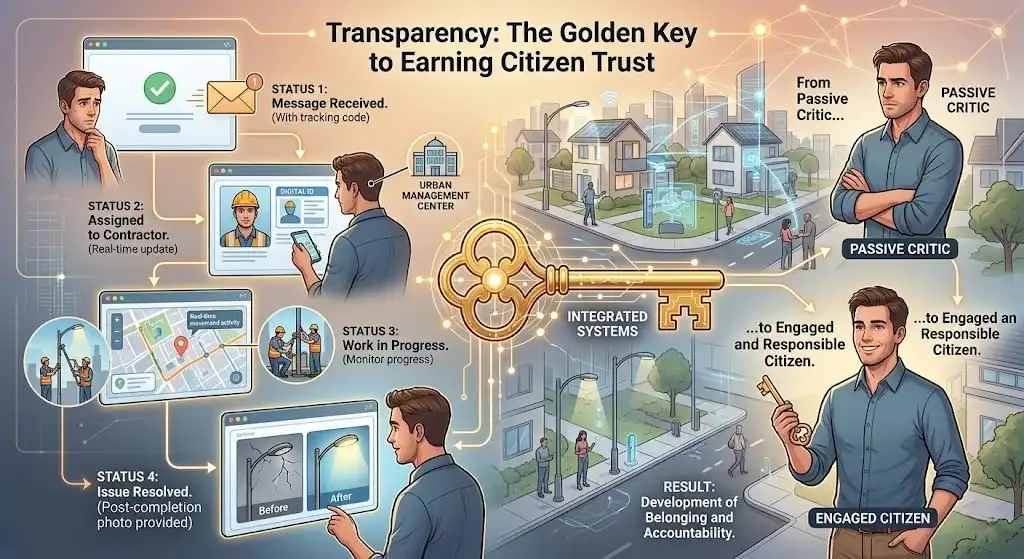
The most significant achievement of integrated systems is “Transparency”. When citizens report an issue, they receive a tracking code and can monitor the progress exactly like tracking a postal package:
- Status 1: Message Received.
- Status 2: Assigned to Contractor.
- Status 3: Work in Progress.
- Status 4: Issue Resolved (Accompanied by a post-completion photo).
This level of transparency shows citizens that their concerns matter to urban management. When people see their reports yield results, they develop a stronger sense of belonging to their neighborhood, transforming from “passive critics” into “engaged and responsible citizens.”
Hidden Benefits of Integrated Systems for City Managers
Besides citizen satisfaction, these systems greatly assist mayors and city managers:
- Precise Monitoring of Contractors: Managers can measure the exact time spent resolving each issue.
- Data Analytics: The system identifies which neighborhoods have the most asphalt issues or which areas lack proper lighting. This data aids in the fair distribution of budgets.
A smart city is not just about having modern buildings or high-speed internet; it is a city where the relationship between managers and citizens is built on transparency and rapid response. Implementing integrated systems to track neighborhood issues is a win-win scenario: it drastically improves the speed and quality of municipal services while strengthening social capital and citizen trust, which is the most valuable asset of any city.