


Waste Management: A Catalyst for Job Creation
In our contemporary world, waste is no longer just an environmental problem to be disposed of; it has transformed into a valuable economic resource. Effective waste management not only contributes to environmental protection but also plays a pivotal role in creating job opportunities and stimulating economic development. In this article, we will explore how the waste management sector can be a fundamental driver of the circular economy and sustainable growth.
Creating Direct and Indirect Job Opportunities
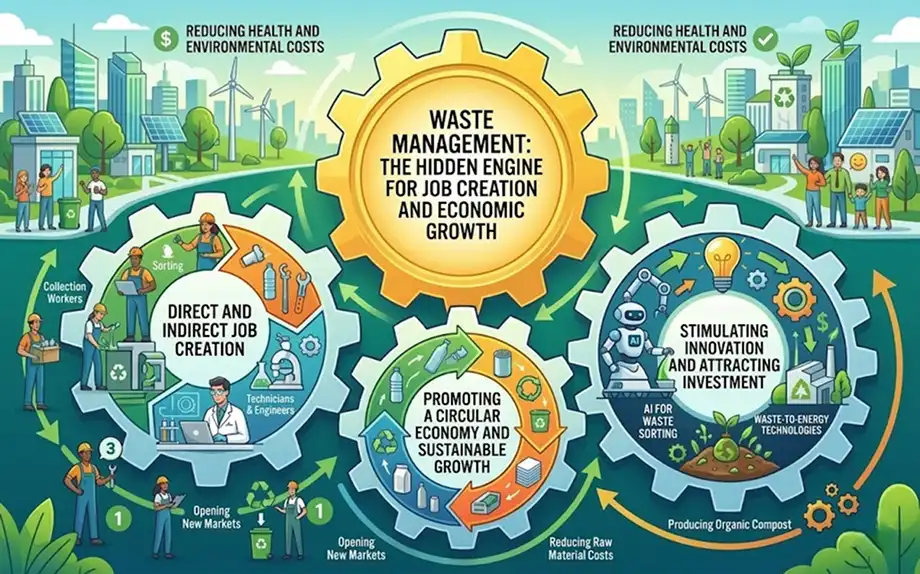
The waste management and recycling industry is one of the most labor-intensive sectors. By investing in this sector, thousands of jobs can be provided across multiple fields, including:
- Collection and Sorting: The continuous need for workers to collect waste and sort it at designated stations.
- Operation and Maintenance: Jobs for technicians and engineers to operate and maintain recycling and waste treatment plants.
- Research and Development (R&D): Opportunities for scientists and researchers to develop new, more efficient technologies for waste treatment and valuable material extraction.
Studies indicate that recycling waste creates approximately 10 times more job opportunities compared to disposing of it in traditional landfills.
Boosting the Circular Economy
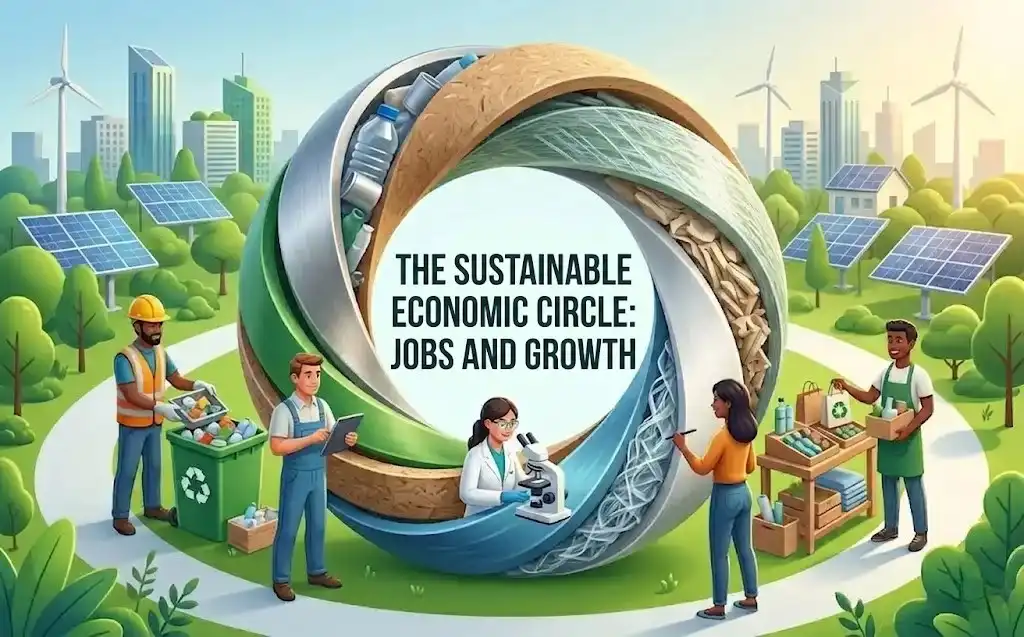
The transition from a “linear economy” (make, use, dispose) to a circular economy relies heavily on waste management. This shift aids the economy by:
- Reducing Raw Material Costs: Reusing recycled materials (such as plastic, glass, and metals) reduces the need for factories to purchase new raw materials at high prices.
- Opening New Markets: Buying and selling recycled materials creates active secondary markets, thereby supporting Small and Medium Enterprises (SMEs).
Stimulating Innovation and Attracting Investments
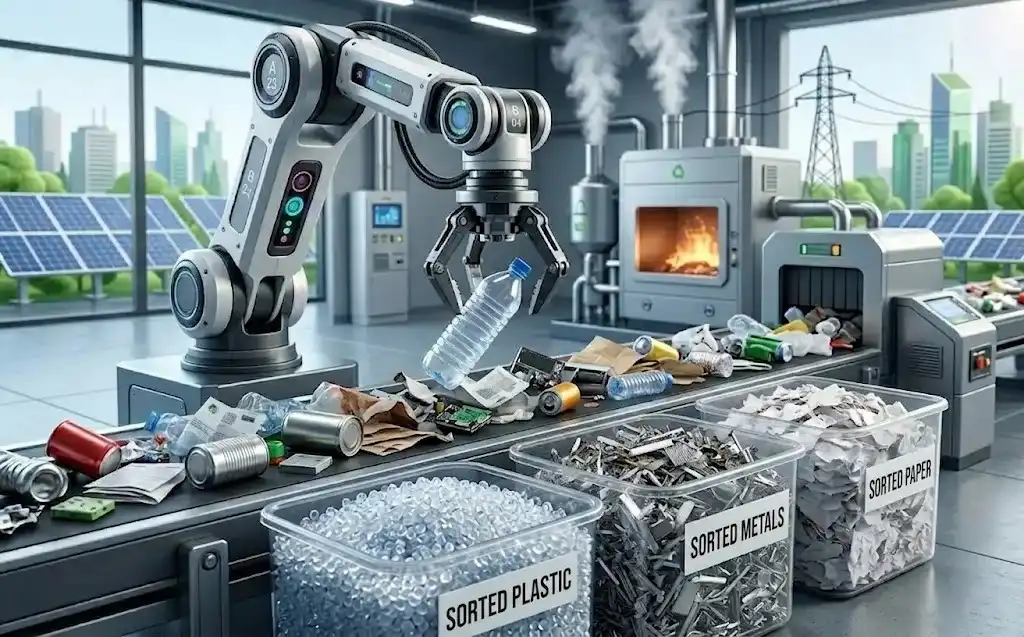
Today, the waste management sector attracts massive investments in the field of green technology. Startups are innovating new solutions, such as:
- Artificial Intelligence (AI) applications for accurate waste sorting.
- Waste-to-Energy technologies, which provide an alternative and clean source of electricity.
- Production of organic fertilizers from agricultural and food waste to support the agricultural sector.
These innovations do not just solve environmental problems; they inject new capital into the market and create a dynamic business environment.
Saving Health and Environmental Costs
Poor waste management leads to air and water pollution, increasing the financial burden on the healthcare sector and reducing individual productivity. Through an advanced waste management system, a nation can:
- Reduce medical expenses resulting from pollution-related diseases.
- Redirect saved funds toward infrastructure and education projects, supporting comprehensive economic development.
Investing in waste management is a direct investment in the future of coming generations and the strength of the national economy. By adopting recycling strategies, embracing the circular economy, and utilizing advanced technical solutions like the iAPP urban management software to organize these processes, we can transform environmental challenges into golden economic opportunities that contribute to job creation and achieving sustainable development.