


How Urban Green Spaces Can Reduce Air Pollution?
As rapid urbanization continues to transform our world, concrete jungles are expanding at an unprecedented rate. While cities are hubs of economic growth and innovation, they also face a silent, invisible crisis: air pollution. Poor urban air quality is a major public health threat, leading to respiratory diseases and reduced life expectancy. However, urban planners and municipalities are increasingly turning to a natural, sustainable solution to clean the air and cool down neighborhoods: Urban Green Spaces. In this article, we explore the science behind how developing green infrastructure acts as a powerful shield against urban air pollution.
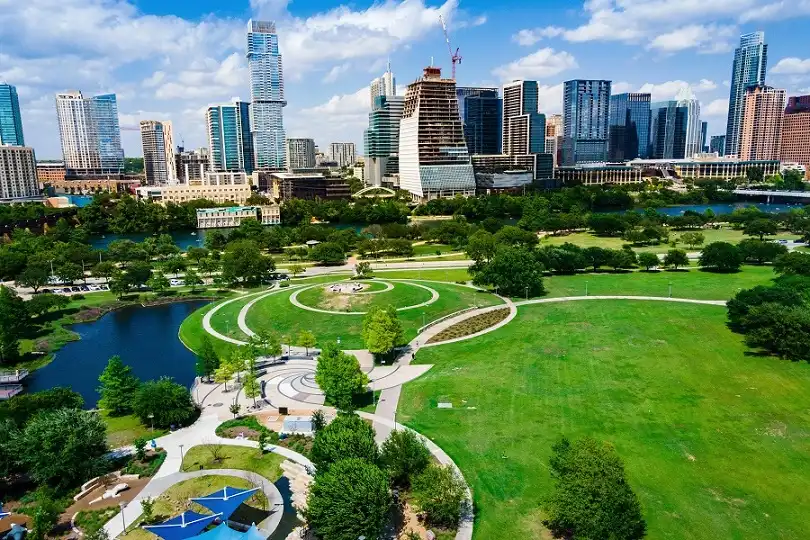
The Science of Trees: Nature’s Air Purifiers
Trees and plants do much more than beautify a street corner; they are highly efficient biological filters. The mechanism through which green spaces improve air quality involves several processes:
- Particulate Matter Filtration: Microscopic pollutants, specifically PM2.5 and PM10, are emitted by vehicle exhausts and industrial activities. The rough surfaces of leaves, bark, and stems physically trap these dangerous particles, preventing them from entering our lungs. Studies show that a dense canopy of trees can reduce localized particulate matter by up to 60%.
- Absorbing Toxic Gases: Through their stomata (tiny pores on leaves), plants absorb harmful gaseous pollutants such as Nitrogen Dioxide (NO2), Sulfur Dioxide (SO2), and ground-level Ozone (O3).
- Oxygen Production: Through photosynthesis, urban forests absorb Carbon Dioxide (CO2) and release fresh oxygen, actively improving the overall air composition.
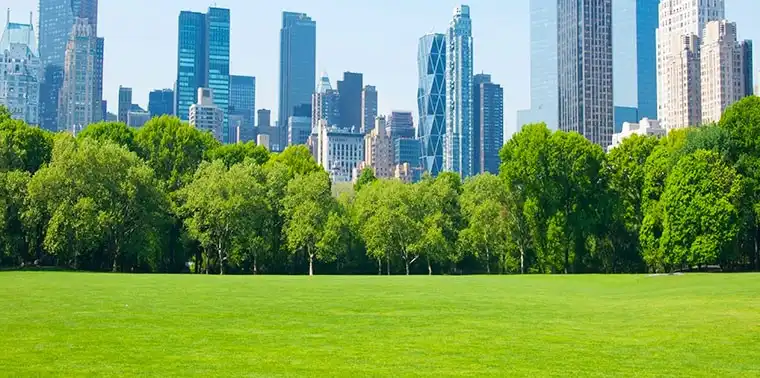
Beyond Traditional Parks: Innovative Green Infrastructure
When we talk about urban green spaces, we are no longer just referring to large central parks. Space in modern cities is a luxury, which has led to the development of innovative green infrastructure:
- Green Walls (Vertical Gardens): Installing plant life on the exterior walls of buildings helps trap pollutants right at the street level, where traffic emissions are highest.
- Green Roofs: Transforming barren rooftops into vibrant gardens not only captures airborne pollutants but also manages stormwater runoff and insulates buildings.
- Urban Forests and Pocket Parks: Converting small, abandoned urban lots into “pocket parks” ensures that residents in densely populated neighborhoods have access to clean air and a natural resting space.
Combating the “Urban Heat Island” Effect
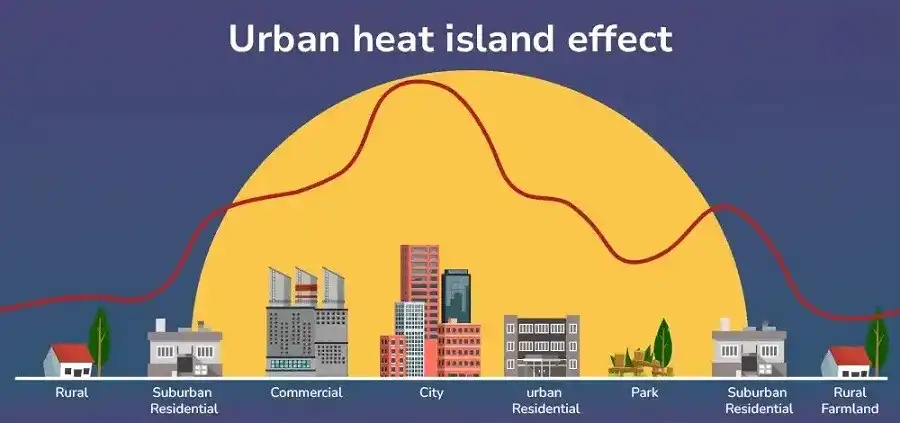
Air pollution and high temperatures are deeply connected. Cities suffer from the “Urban Heat Island” (UHI) effect, where concrete and asphalt absorb solar radiation, making urban areas 2°C to 5°C warmer than surrounding rural regions.
Higher temperatures accelerate the chemical reactions that form ground-level ozone (O3), a toxic component of smog. Green spaces combat this by providing direct shade and cooling the air through a process called evapotranspiration. By lowering the ambient temperature by even 1°C to 3°C, trees significantly reduce the formation of dangerous smog.
The Economic and Social Returns of Greening Cities
Investing in urban greenery is not just an environmental charity; it is a smart economic strategy for municipalities.
- Reduced Healthcare Costs: By mitigating PM2.5 and toxic gases, cities see a sharp decline in hospital admissions related to asthma and cardiovascular diseases.
- Energy Savings: The cooling effect of trees reduces the reliance on air conditioning during summer, lowering overall energy consumption by up to 30% in highly shaded neighborhoods.
- Enhanced Mental Wellbeing: Access to green spaces reduces stress, encourages physical activity, and fosters a stronger sense of community among citizens.
Developing urban green spaces is a vital strategy for the survival and prosperity of modern cities. To win the war against air pollution, municipalities must integrate green infrastructure into every aspect of urban planning—from green roofs on commercial skyscrapers to tree-lined pedestrian walkways. By utilizing specialized tools like the iAPP urban management software to monitor and maintain these assets, and by blending nature with urban development, we can create smarter, healthier, and more breathable cities for future generations.